


We Bought an Abandoned 1969 Superyacht

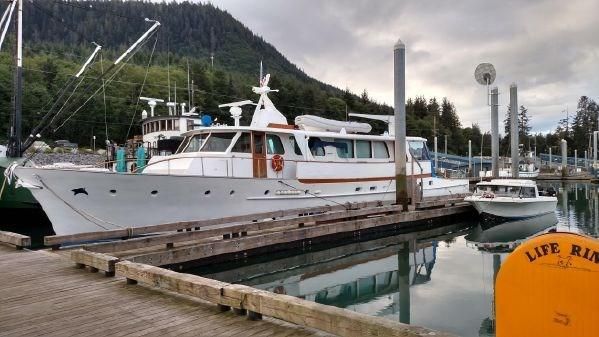
This is Tangaroa—the neglected 78-foot luxury yacht we bought to live on and travel the world. She wasn’t always called that. When we found her, she was sitting under a tarp in Wrangell, Alaska, wet, moldy, and literally attached to the seafloor with mussels. And little did we know, she was about to take over our lives.

From Superyacht Crew to Family Life on Shore
Hi, we’re Blaine and Janis. We actually met on a superyacht 25 years ago—he was the engineer, I was the first mate. We ended up in the same crew quarters, and, well… things happen on the high seas. We got married, left the yacht world to raise kids, buy houses, and live “normal life.” But after 20 years on land, we knew it was time to get back on the water.
Choosing the Right Boat
We started out thinking we wanted a 58-foot powerboat. Big enough for us and our two kids, manageable for two people. Most of our careers had been on sailboats—yes, we’re sailors at heart—but we wanted easy this time.
And here’s the kicker: it had to be aluminum.
- Fiberglass? No thanks, we’ve fixed enough of that.
- Steel? Rust.
- Ferro-cement? Who even builds boats out of that anymore?
- Wood? Gorgeous, but way too much maintenance.
So aluminum it was. Plus, Blaine welds. If it cracked, he could fix it.
The Surprise in Wrangell, Alaska
One day scrolling through YachtWorld, Blaine spotted a listing. A 1969 Stephens Bros. yacht named Wind Barker. (Yes, we’re pretty sure it was named after a dog farting—the icon on the bow was literally a dog’s backside. Classy.)
The photos online were stunning: gleaming rails, sweeping lines, a true classic. The price was low enough to make us suspicious. But it was aluminum, it was beautiful, and it had potential.

So, we flew up to Wrangell to see it.
Reality hit fast.
The “yacht” was hidden under a tarp in rainy, damp Alaska. Mold everywhere. Paint falling off. An old fighting chair bolted to the aft deck like some kind of bad joke. And the broker? He wasn’t even there. He told us, “The keys are in the freezer on the back deck.” Believe it or not, he was right about that one thing.
Inside was dark, cold, and dreary. No lights, no heat, and absolutely prime conditions for mold to grow. It was nothing like the pictures.

First Impressions and Tough Decisions
We spent three days going through the boat, taking photos and inventorying every system we could. On the surface, it was a disaster. But there were things that hooked us. I (Janis) fell in love with the teak rails curving beautifully down the cap rail. Blaine loved the classic lines and saw how he could blend new technology into her old-school style.
The asking price was $350,000 USD—close to half a million Canadian at the time. Far too much. So we made an offer of $200,000 CAD… and asked for full fuel tanks. The seller laughed. We walked. Two weeks later, our broker called back. The seller would accept, minus the fuel. Suddenly, this moldy beast was about to become ours.
The Sea Trial
Blaine flew back up for the sea trial, and, being Blaine, he couldn’t sit still while waiting. He started tinkering. The mechanic showed up ready to tell us what didn’t work. Blaine cut him off—“That stuff works now. Fixed it yesterday.” The mechanic looked at him and said, “This is the boat for you.”
The old Detroit Diesel 12V71s roared to life. The ultrasound came back clear enough. The hull was solid. We knew the engines were ancient WWII-era designs, but they ran. That was enough.
Racing Against the Pandemic
We signed the papers in November 2019. Almost immediately, the world started changing. In late December, masks were showing up in airports and border restrictions were being whispered about. The boat was in Alaska. We lived in Canada. If the borders closed, we might not see her for years.
On December 26th, we flew back to Wrangell. We had three days to get this unknown boat ready for a 650-mile winter run down to Victoria. Three days. New-to-us engines, unknown systems, no backup plan.
A Beautiful but Risky Delivery
The trip south was breathtaking. Snowy mountains, flat seas, a surreal calm. It was also terrifying—this boat had sat for eight years. We had no idea what might fail. (And yes, things failed. More on that in another story.)
But we made it. Tangaroa arrived in Victoria.
The Beginning of the Never-Ending Sea Trial
She needed everything: heat, power, water, and thousands of hours of work. The kids hadn’t even seen her yet. But the bones were good. The dream was alive.
That was the start of what we now call The Never-Ending Sea Trial.
Subscribe, follow along, and see if we can actually turn this abandoned 1969 superyacht into our retirement dream home.