


How to Upgrade Your Boat’s Nav System on a Budget

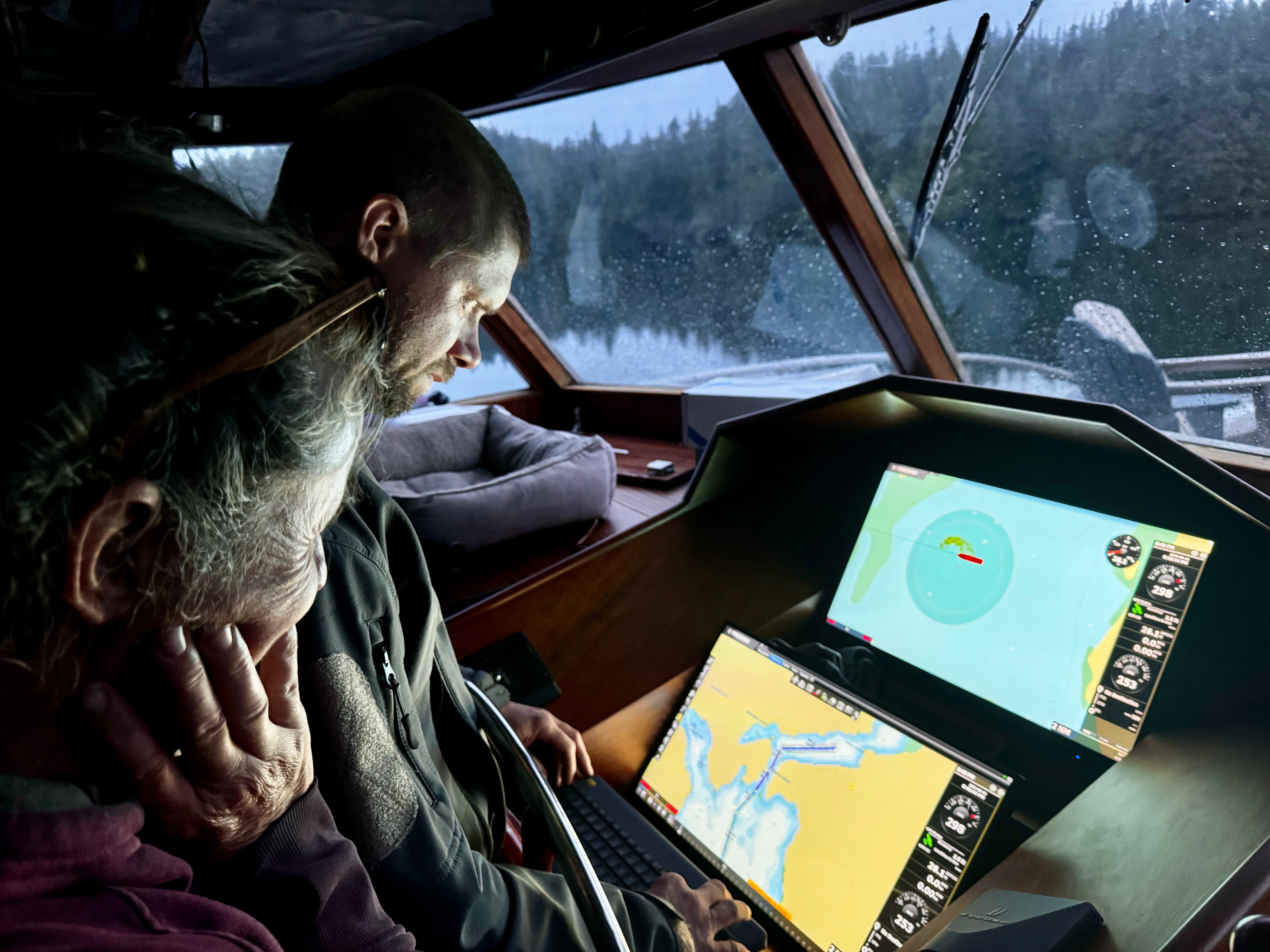
How We Built a Full-Feature Nav Setup for a Fraction of the Cost
When it came time to upgrade our navigation system on the 1969 aluminum Stephens Bros yacht we had just purchased, Blaine dove headfirst into research mode. Instead of going with an expensive, all-in-one marine MFD (Multi-Function Display), he built a fully functional nav system using TimeZero software and a mini PC—and saved thousands in the process.
If you’re outfitting your own boat and feeling a little sticker shock looking at the cost of modern gear, this might give you some inspiration.
Why We Went Custom
We chose TimeZero Professional as the backbone of our navigation system. It runs on a standard Windows PC and doesn’t require much computing power. For hardware, we went with a compact HP EliteDesk mini PC that works like a charm.
The real advantage?
With a PC-based setup, we could connect big touchscreen monitors (we’re using 22″ ViewSonic touchscreens) for a fraction of what a single marine MFD would cost—and we’re talking thousands less.
Because it’s all installed in a dry interior space aboard Tangaroa, we didn’t need ruggedized displays or waterproof casings. However, we do have a second hand Police Mobile Data Terminal (MDT) running a version of Time Zero that we use in our dinghy!
What It Cost and What It Does
Here’s a rough breakdown of what we pieced together:
- Mini PC (HP EliteDesk) – $175 USD
- 22″ ViewSonic Touch Monitors – $250 USD each
- TimeZero Navigator – $700 CAD
- Sounder Module – $450 USD
- Furuno DFF-1 Sounder (used) – $130 USD
- DRS-12 Radar (used) – $700 USD
- SCX-20 Satellite Compass (new) – $1,400 USD
- NavPilot 711C w/ control head & rudder sensor (used) – $700 USD
All in, we got radar, sounder, autopilot integration, and high-res charts—everything a modern nav suite offers—for a fraction of the price mostly on Ebay.
Things We Learned
Blaine said if he could do one thing differently, he would’ve bought a mini PC with a standard power supply, so it could run directly off 12V DC using a DC/DC converter. As it is, we’re using an inverter—but there are better ways to simplify down the road.
One of the few limitations?
This setup doesn’t support engine monitoring or digital switching like some MFDs do. But since we don’t use those features, it wasn’t a deal-breaker.
SCX-20: The Splurge That Was Worth It
The SCX-20 satellite compass was the only brand-new item we bought, and it’s been a game changer. GPS accuracy within 3 feet, plus pitch, roll, and yaw data that helps stabilize both radar and sounder images. It also integrates perfectly with our autopilot and isn’t affected by nearby electronics like a fluxgate compass might be.
Where We Found the Gear
Almost all of this was sourced secondhand. The Furuno DFF-1, DRS-12 radar, and even the NavPilot came from sites like eBay—often from sellers in Florida where sportfishing boats regularly upgrade their systems. Great gear at a serious discount.
Final Thoughts
We managed to put together a powerful navigation system—radar, sonar, compass, and autopilot control—for a tiny fraction of what just one marine MFD would cost.
“For less than the price of a single Furuno display, we built an entire nav suite that does everything we need.”
It’s not the setup for everyone, but if you’ve got a bit of tech know-how and don’t mind getting hands-on, it’s a fantastic alternative to breaking the bank on brand-new gear.
Bonus for Our Readers
We’ve now been using TimeZero for over five years and stand by it so much that we’re proud to say that we reached out to them and now we’re official TimeZero Ambassadors.
If you’re thinking about building your own navigation setup or upgrading your system, we’ve secured a 10% discount just for you.
Use code TANGAROA at checkout in the TimeZero Store to save on your purchase.
Happy navigating!
Blaine and Janis