


Discover the Alert Bay – Home of the World’s Tallest Totem Pole

July 13th, 2025
After pulling into Alert Bay late at night, the wind finally calmed down and we got a great hook. There were two other sailboats anchored near us, including one with a Canadian couple onboard who’d been sailing around the world for 19 years. Not a bad way to meet your neighbours.
We were now on Cormorant Island, home of Alert Bay, tucked off the northern coast of Vancouver Island along the Inside Passage. The island might be under five kilometers long, but it’s absolutely packed with history, culture, and community. This isn’t just a tourist stop — it’s a living place, shaped by the people who’ve called it home for generations. And we were here to see what makes it so special.
First Steps: The Boardwalk and the Market
The next morning, Izzie and I took Punga (our 15-foot aluminum dinghy) to shore while Blaine stayed back on Tangaroa. One of the engines had started acting up, and he needed to sort it out. (If you’re into boat projects, you can see what went wrong — and how he fixed it — over on our Never-Ending Sea Trial YouTube channel.)
Izzie and I found a dinghy dock tucked behind the rock break wall and tied up. From there, we took a right and wandered down the boardwalk — and what a boardwalk it was. Every few steps we passed names of fishing boats etched into the planks, a tribute to the working boats that once called Alert Bay home. Since it was graduation season, the faces and names of local high school grads were displayed proudly along the railing. Such a beautiful way for the community to celebrate its next generation.
At the end of the boardwalk, just past the ferry terminal, we found the smallest but most charming street market I’ve ever seen — just three booths, and every one of them worth a visit. The first had sea glass and resin ornaments, and I picked up a sand dollar to hang on our Christmas tree. The second booth was selling fresh baked goods, with all proceeds going to the beautification of Alert Bay. So, of course, we bought some brownies. The last stall was a local berry vinegar maker. I taste-tested a few and ended up buying a sampler of four — perfect for dressings, marinades, and cocktails.

The Engine’s Fixed and Blaine Joins In
After our little shopping spree, Izzie got hungry, but since it was Sunday, there wasn’t much open. So we zipped back to Tangaroa to get her some food — and to drop off Maggie, since dogs weren’t allowed inside some of the places I wanted to visit. Blaine had good news waiting: he’d fixed the engine. That’s one of the huge perks of doing our own repower. Blaine knows these Cummins engines inside and out, and he had it sorted in two hours flat.
So we switched spots — Izzie and Maggie stayed on board, and Blaine and I went to shore to explore more of Alert Bay together.
U’mista Cultural Centre: A Return of Culture
We walked left from the dock this time and headed toward the U’mista Cultural Centre. The name means “the return of something important,” and the building houses potlatch regalia that was seized during the decades-long potlatch ban. These artifacts were stolen from villages like Village Island during raids — the one in 1921 is particularly infamous — and U’mista became one of the first places in BC to bring them home.
This place is more than a museum. It’s a symbol of cultural survival and strength. They run programs in cedar weaving, language preservation, and host rotating exhibits. Out of respect, we didn’t take any photos inside, but I did pick up a few things from the gift shop — a mug with a totemic octopus, a hat with a hummingbird design, and a healing bracelet for Izzie.
A Somber Visit to St. Michael’s
Leaving U’mista, we came across the site of the St. Michael’s Indian Residential School. The school had operated from 1929 until the early 1970s and was the last residential school in British Columbia to close. It was demolished in 2015, and the land was blessed by the ‘Namgis First Nation.
In its place now is a large wooden orange T-shirt and a growing collection of children’s shoes — a heartbreaking reminder of the children who never came home. Blaine and I stood there in silence, overwhelmed. The sadness was heavy. We noticed three ravens hopping around the shoes, calling sharply. It felt like they were guardians — watching, protecting, maybe even warning us. So we left quietly, out of respect.
The World’s Tallest Totem Pole and the Big House
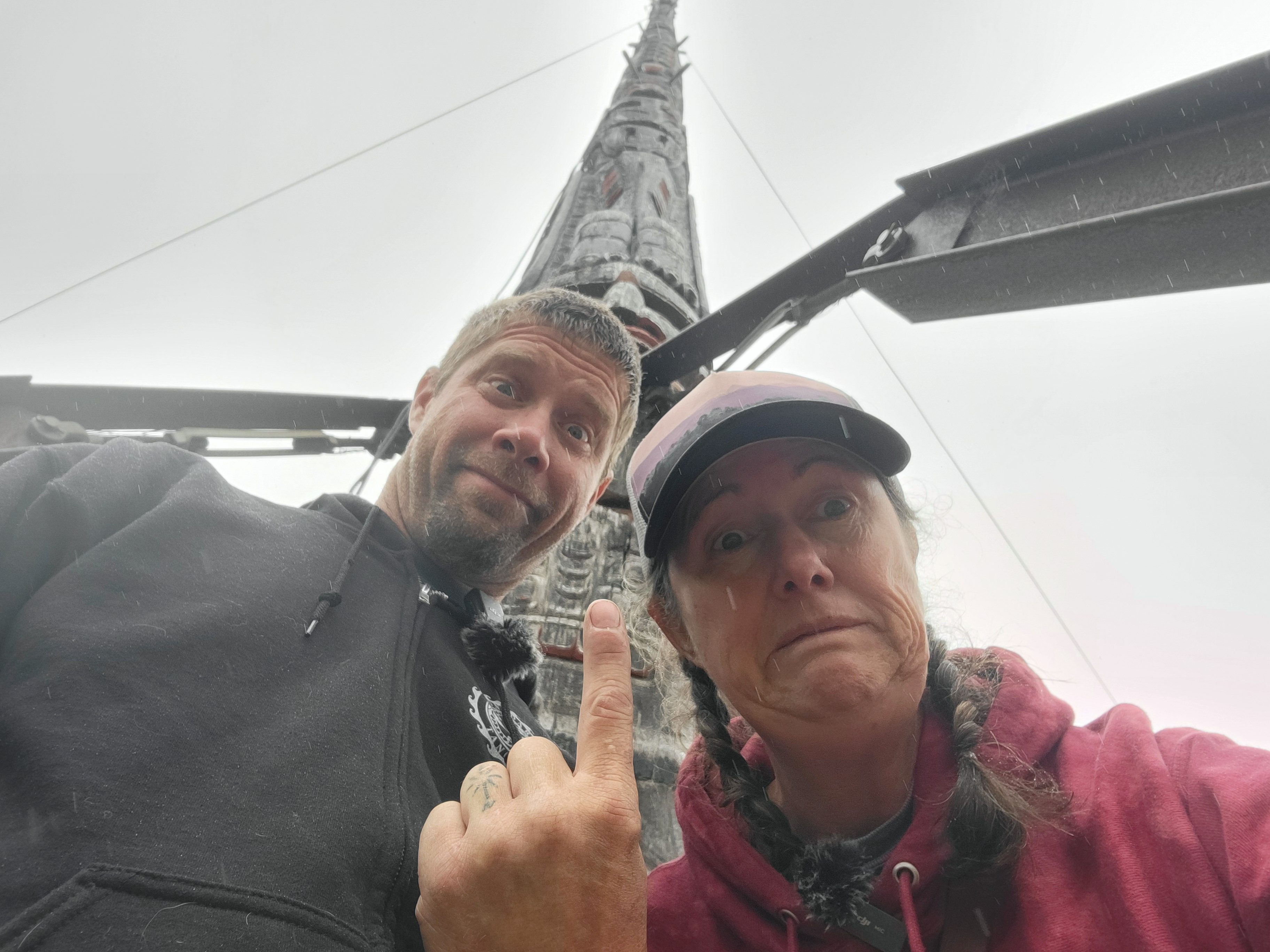
From there, we climbed up to see what I’d spotted from the boat: the world’s tallest totem pole. It stands 173 feet tall, carved in two parts, and towers next to the Alert Bay Big House. Even if there’s debate over whether it still holds the world record, there’s no denying it’s incredible. The pole features Thunderbird, Raven, Bear, Sunman, and more — all telling stories of family and community.
Next to the pole sits the Alert Bay Big House, rebuilt in 1999 after the original was lost to a fire. It’s used today for potlatches and cultural ceremonies. The entrance carvings alone were breathtaking.
A Town That Tells Its Story
At the far end of town is the ‘Namgis Burial Grounds, where totem poles — some upright, others weathered and returning to the earth — mark family lineages. We didn’t make it there this time. After everything we’d already seen, and with the previous day’s York Island adventure still fresh in our legs, we were pretty spent.
Back aboard Tangaroa, we hauled up anchor and headed north toward Beaver Cove. We were planning to pick up our friend Captain Paul the next morning and continue the journey.
Why Alert Bay Matters
Alert Bay isn’t polished. It’s not curated for tourists. It’s real — and that’s exactly what makes it matter. Three First Nations governance groups call this island home: the ‘Namgis, Tlowitsis, and Whe-la-la-u Area Council. Their languages are painted on stop signs. Their children go to school here or ferry to Port McNeill. Their stories are still unfolding.
You come to Alert Bay not just to see, but to listen. To learn. And to remember.
We’re continuing our journey north as part of the Great Siberian Sushi Run, but Alert Bay will stick with us — not just as a place we visited, but as a place that changed how we see the coast.
